Pineal Gland Third Eye: The Scientific Truth Behind Ancient Wisdom
Pineal Gland Third Eye: The Scientific Truth Behind Ancient Wisdom
1/6/2026 • By Dr. Sarah Mitchell, Neuroscience Researcher
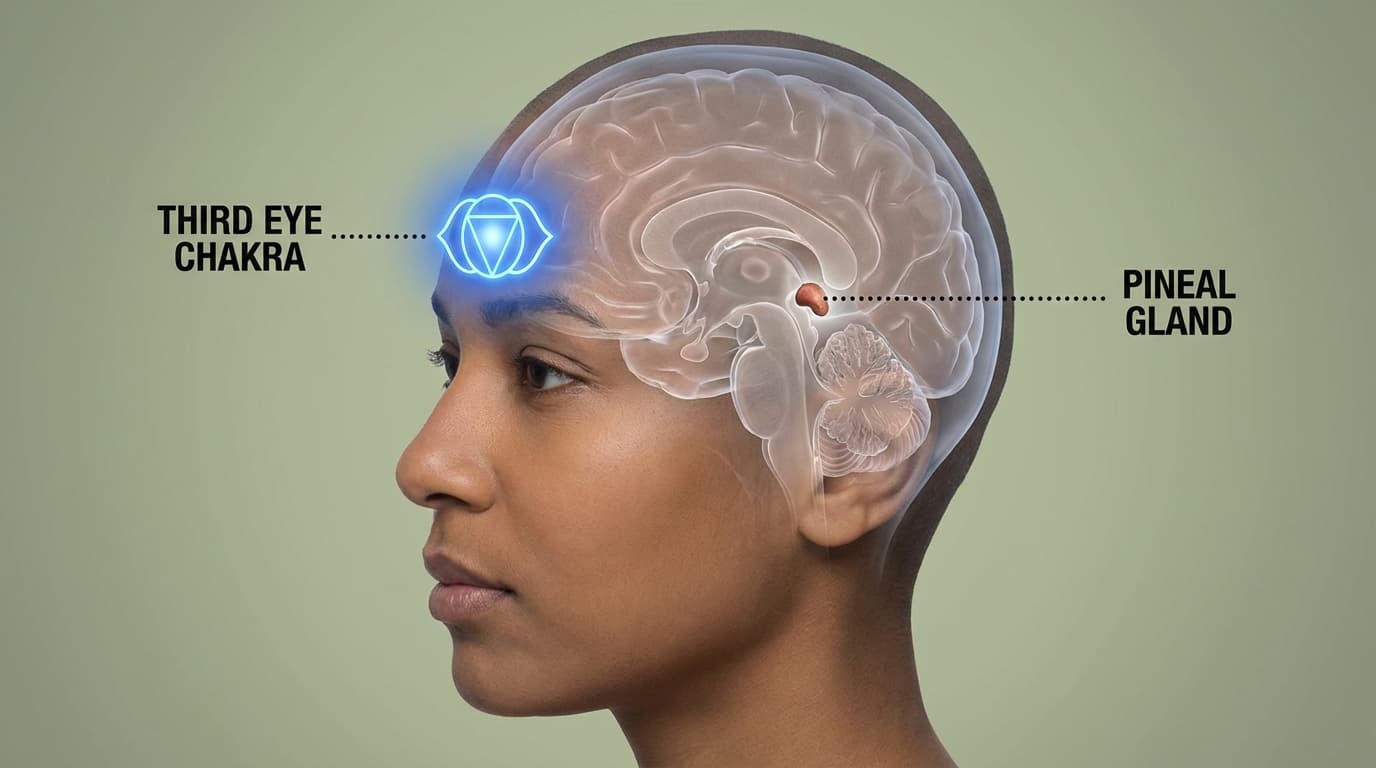
The connection between the pineal gland and the third eye represents one of the most fascinating intersections of ancient spiritual wisdom and modern neuroscience. For thousands of years, meditation traditions across cultures have focused on activating the “third eye”—a mystical center of intuition, insight, and higher consciousness located in the center of the forehead. Modern science has discovered that this location corresponds almost exactly to the pineal gland, a pea-sized endocrine organ that produces powerful neurochemicals affecting consciousness, perception, and cognitive function.
This isn’t coincidence or confirmation bias. The anatomical correspondence is precise. The functions attributed to the third eye in spiritual traditions—regulation of sleep and dreams, access to higher states of awareness, intuitive knowing, and expanded perception—align remarkably with the pineal gland’s scientifically established roles in melatonin production, DMT synthesis, circadian regulation, and neurochemical control.
Understanding the pineal gland as the biological basis for the third eye transforms both concepts. The spiritual practice of third eye activation becomes a legitimate method for optimizing a crucial brain structure. The scientific study of pineal function gains insight from thousands of years of meditative observation and practice. This comprehensive guide explores the complete truth about the pineal gland third eye connection, revealing what ancient wisdom knew and modern science is now confirming.
The Third Eye in Ancient Traditions
Before examining the scientific evidence, understanding how different spiritual traditions have conceptualized the third eye provides crucial context for recognizing the remarkable consistency across cultures separated by geography and time.
Hindu and Yogic Traditions: The Ajna Chakra
In Hindu and yogic philosophy, the third eye is known as the ajna chakra, the sixth of seven primary energy centers in the human body. Located between the eyebrows at the center of the forehead, this chakra is considered the seat of intuition, wisdom, and inner vision. When activated, practitioners report enhanced intuition and psychic perception, ability to perceive subtle energies invisible to normal sight, access to higher states of consciousness and spiritual insight, and connection to universal consciousness beyond individual ego.
The ajna chakra is associated with the color indigo or deep purple, the element of light itself, and the mantra “OM” or “KSHAM.” Meditation practices focus extensively on activating this center through visualization, breathwork, and sustained attention. Ancient yogis clearly understood that something profoundly important existed at this specific location, even without modern understanding of brain anatomy.
Buddhist Traditions: The Urna
Buddhist iconography depicts enlightened beings with a small protrusion or mark between the eyebrows called the urna. This represents the awakened third eye—a physical manifestation of spiritual development and expanded consciousness. Buddhist meditation practices include techniques specifically designed to activate this center, leading to clarity of perception, insight into the true nature of reality, liberation from mental suffering, and ultimately enlightenment.
The consistency of this location across Buddhist traditions from Tibet to Japan to Southeast Asia suggests more than symbolic convention—practitioners were perceiving or experiencing something real at this anatomical location.
Ancient Egyptian: The Eye of Horus
Ancient Egyptian spirituality featured the Eye of Horus, a symbol appearing throughout temples and texts. Remarkably, when overlaid on a cross-section of the human brain, the Eye of Horus corresponds almost perfectly to the location and surrounding structures of the pineal gland. The thalamus forms the eye, the corpus callosum forms the eyebrow, and the pineal gland sits at the precise center of the “eye.”
This suggests that ancient Egyptian priests, through methods we can only speculate about, had knowledge of internal brain anatomy and specifically recognized the pineal gland’s importance. The Eye of Horus represented divine protection, healing, and spiritual sight—functions we now understand relate directly to pineal gland activity.
Cross-Cultural Consistency
What’s striking is that cultures with no contact—ancient India, Tibet, Egypt, indigenous American traditions, African spiritual practices—all identified the same location as a center of spiritual power and expanded consciousness. They used different names and symbols, but the anatomical location and attributed functions remained remarkably consistent.
This cross-cultural agreement suggests that practitioners across history were perceiving or experiencing something genuine at this location, not simply perpetuating arbitrary symbolism. Modern neuroscience now provides the explanation: they were all discovering, through direct internal observation via meditation, the pineal gland and its profound effects on consciousness.
The Pineal Gland: Anatomy and Function
Understanding what the pineal gland actually is and does scientifically reveals why it serves as the biological basis for the third eye concept. This isn’t mystical speculation—it’s established neuroanatomy and endocrinology.
Location and Structure
The pineal gland sits in the epithalamus, positioned almost exactly at the geometric center of the brain between the two hemispheres. It’s approximately 8mm in length, shaped like a tiny pine cone (hence the name “pineal” from the Latin for pine cone). This central location corresponds precisely to the third eye position described in spiritual traditions.
The gland is unique among brain structures in several ways. Unlike most brain tissue, it sits outside the blood-brain barrier, allowing direct access to bloodstream compounds. It contains photoreceptor cells similar to those in the retina, despite being buried deep within the brain with no direct light exposure. It’s one of the few unpaired brain structures, sitting alone at the midline rather than having left and right versions.
Primary Functions
The pineal gland’s established scientific functions include melatonin production—the hormone regulating sleep-wake cycles and circadian rhythm. Melatonin affects far more than sleep; it influences mood, cognitive function, immune response, and aging processes. The gland serves as the master circadian regulator, responding to light-dark cycles to coordinate biological rhythms throughout the body.
It produces or influences numerous neurochemicals beyond melatonin, including serotonin (converted to melatonin), potentially DMT (dimethyltryptamine), a powerful endogenous psychedelic, and various other neuromodulators affecting consciousness and perception. The pineal gland regulates reproductive hormones and sexual development, particularly the timing of puberty.
It influences the entire endocrine system, coordinating hormonal signals throughout the body, and affects neurotransmitter balance including dopamine, acetylcholine, and others crucial for memory and cognition. Understanding how this gland controls 80% of memory function reveals its central importance beyond any single function.
The DMT Connection
Perhaps most fascinating for understanding the third eye connection is the pineal gland’s potential role in producing DMT. Research by Dr. Rick Strassman and others suggests that the pineal produces DMT, though this remains somewhat controversial. DMT is known to produce profound mystical experiences, visual phenomena, sense of entering alternate dimensions or realities, ego dissolution and unity consciousness, and encounters with seemingly autonomous entities or beings.
If the pineal does produce DMT—particularly during deep meditation, birth, death, and REM sleep—this would directly explain many phenomena attributed to third eye activation including vivid internal visions, mystical experiences, expanded states of consciousness, and perception of non-ordinary realities.
Whether or not DMT production is definitively proven, the pineal gland unquestionably affects consciousness through its various neurochemical outputs. The third eye experiences described across traditions align remarkably with the effects of pineal-produced compounds.

The Third Eye Opening: What’s Actually Happening
When spiritual practitioners describe “opening the third eye” or “activating the ajna chakra,” what’s happening neurobiologically? Understanding the science behind these experiences bridges the gap between ancient wisdom and modern knowledge.
Increased Pineal Activity
Meditation and focused attention on the third eye region produce measurable increases in pineal gland activity, blood flow to the pineal region, and altered brainwave patterns particularly increased theta and delta waves. These changes correlate with the subjective experiences practitioners describe as third eye activation.
Brain imaging studies of long-term meditators show structural and functional changes in regions surrounding the pineal gland, increased melatonin production and altered circadian rhythms, and enhanced connectivity between brain regions associated with attention and awareness.
The sensations practitioners report—pressure at the third eye point, tingling or vibration, internal light or visions, and expanded awareness—likely reflect increased neural activity, blood flow, and neurochemical release in and around the pineal gland.
Decalcification and Restored Function
A crucial factor most spiritual teachings don’t address is pineal calcification. By age 60, brain imaging shows 60-80% of people have significant calcium deposits in their pineal gland from fluoride accumulation, heavy metal exposure, and poor calcium metabolism. A calcified pineal simply cannot function optimally or respond fully to activation attempts.
Many people struggle with third eye activation not because the practice is flawed, but because their pineal gland is physically impaired by calcification. The biological structure cannot produce the neurochemical responses that manifest as third eye experiences. This explains why some practitioners progress rapidly while others practice for years with minimal results—the difference often lies in pineal gland health, not meditation skill.
When practitioners successfully decalcify their pineal glands through fluoride elimination, targeted supplementation, and nutritional support, third eye activation typically becomes dramatically easier and more profound. The gland can finally produce the neurochemical states that meditation is designed to stimulate.
Enhanced Neurochemical States
Third eye opening involves entering specific neurochemical states characterized by elevated melatonin and potentially DMT, balanced serotonin and dopamine, increased endogenous opioids producing bliss states, and altered glutamate/GABA balance affecting perception.
These neurochemical changes produce the subjective experiences associated with third eye activation including visual phenomena and inner light, expanded sense of awareness beyond normal consciousness, intuitive knowing or direct perception beyond logical reasoning, emotional states of bliss, peace, or unity, and sometimes mystical or transcendent experiences.
Whether interpreted as spiritual awakening or optimized neurobiology, the experiences are genuine and correspond to measurable changes in pineal function and neurochemistry.
Opening Your Third Eye: Practical Methods
Understanding the pineal gland basis for the third eye transforms activation from mystical pursuit to practical neuroscience. These evidence-based methods combine ancient technique with modern understanding.
Meditation and Visualization
Daily meditation focused on the third eye point—center of forehead between eyebrows—directly stimulates pineal activity. Visualize a glowing sphere of indigo or violet light at this location. Use breathwork coordinated with visualization—inhale light into the third eye, exhale blockages out. Practice sustained attention for 20-30 minutes daily, gradually extending as capacity improves.
Consistency matters more than duration. Twenty minutes daily produces better results than sporadic longer sessions. Guided meditation specifically for pineal activation provides structured practice for those new to third eye work.
Light and Darkness Exposure
The pineal responds powerfully to light. Get bright natural light exposure within 30 minutes of waking to optimize circadian rhythm and pineal function. Spend time in complete darkness—use blackout curtains or practice darkness meditation. Even small amounts of light at night suppress melatonin and impair pineal function.
Consider safe sun gazing practices during first/last 30 minutes of daylight—only during these low-UV periods and starting with just seconds. The light entering through the retina affects pineal function via the retinohypothalamic tract.
Sound and Vibration
Chanting activates the third eye through vibration. The mantra “OM” resonates at approximately 136.1 Hz, potentially affecting pineal tissue directly. Practice extended chanting sessions of 10-20 minutes, directing the vibration toward the center of your head.
Some practitioners use tuning forks or binaural beats at frequencies claimed to resonate with the third eye (432 Hz, 528 Hz, 936 Hz), though scientific validation of specific frequencies is limited. The vibrational aspect itself appears beneficial regardless of exact frequency.
Biological Decalcification
This is where modern science provides crucial advancement beyond traditional methods. Ancient practitioners didn’t know about fluoride toxicity or pineal calcification. Eliminating fluoride immediately through fluoride-free toothpaste, reverse osmosis water filtration, and avoiding processed foods made with fluoridated water is essential.
Active decalcification requires specific compounds. Tamarind extract increases fluoride excretion—studies show significant fluoride removal with regular tamarind consumption. Chlorella binds heavy metals and fluoride for elimination. Research confirms its chelation effectiveness. Vitamin K2 directs calcium to bones rather than soft tissues like the pineal, preventing further calcification.
Rather than sourcing multiple supplements separately, comprehensive formulations address all decalcification factors simultaneously. Pineal Guardian combines tamarind for fluoride removal, chlorella for heavy metal detoxification, pine bark extract for antioxidant neuroprotection, ginkgo biloba for enhanced cerebral blood flow, spirulina for neurotransmitter support, lion’s mane for neurogenesis, and bacopa for cognitive enhancement.
Users consistently report that biological support through decalcification dramatically enhances third eye activation practices. Meditation that produced minimal results for months suddenly becomes profound once the pineal can respond properly. This represents perhaps the most important advancement in third eye practice—addressing the biological impediments that prevent activation regardless of technique quality.

Signs of Third Eye Activation
How do you know if your third eye is actually opening? These are the commonly reported signs, understood now through both spiritual tradition and neuroscience.
Physical Sensations
Pressure or tingling at the third eye point is often the first sign, indicating increased blood flow and neural activity in the pineal region. Headaches centered between the eyebrows sometimes occur as the area activates—these typically pass as your nervous system adjusts. Pulsing or vibration sensation corresponds to rhythmic pineal activity.
Changes in light sensitivity may occur—increased sensitivity to bright lights or enhanced perception of subtle light and color. Some people report feeling energy or warmth flowing upward through the spine to the third eye, possibly reflecting changes in cerebrospinal fluid circulation and neurochemical distribution.
Perceptual Changes
Visual phenomena with closed eyes including seeing indigo or purple light, geometric patterns or mandalas, or bright white light in the center of vision during meditation. These likely reflect altered visual cortex activity and neurochemical changes affecting perception.
Enhanced dream vividness and recall occurs as pineal melatonin production optimizes, affecting REM sleep where dreams occur. Spontaneous visions or mental imagery becoming more vivid and detailed indicates enhanced activity in visual processing regions influenced by pineal output.
Increased intuitive perception—knowing things without logical reasoning or perceiving subtle cues others miss—may reflect optimized neurochemical balance enhancing pattern recognition and subconscious processing.
Cognitive and Emotional Shifts
Enhanced mental clarity and cognitive sharpness results from optimized neurotransmitter balance as pineal function improves. Better memory and learning ability comes from improved acetylcholine regulation and sleep-dependent memory consolidation. Increased creativity and problem-solving ability reflects enhanced connectivity between brain regions.
Emotional changes include greater peace and equanimity from balanced serotonin, reduced anxiety and stress reactivity through optimized circadian rhythm and stress hormone regulation, and sense of connection or unity possibly related to altered default mode network activity and ego boundaries.
Spiritual Experiences
Mystical or transcendent states during meditation potentially relate to endogenous DMT or other pineal compounds affecting consciousness. Sense of expanded awareness beyond normal consciousness may reflect altered activity in brain regions mediating self-perception.
Synchronicities or meaningful coincidences increasing might reflect enhanced pattern recognition or possibly—from a spiritual perspective—increased intuitive connection to universal consciousness. Whether interpreted scientifically or spiritually, these experiences are real and consistently reported across third eye practices.
Common Obstacles and Solutions
Most people encounter challenges in third eye activation. Understanding obstacles helps you address them effectively rather than concluding the practice doesn’t work.
Obstacle 1: Severe Pineal Calcification
The most common obstacle that spiritual traditions rarely address—your pineal gland may be too calcified to respond adequately to meditation alone. Solution: Address calcification directly through fluoride elimination, targeted decalcification compounds, and comprehensive pineal support. Understanding foods that damage your pineal gland helps you avoid further calcification while working to reverse existing damage.
Combine meditation practice with biological restoration. Neither alone produces optimal results, but together they’re transformative. Many practitioners report that months of meditation practice suddenly becomes profoundly effective once they address pineal calcification.
Obstacle 2: Inconsistent Practice
Opening the third eye requires sustained, consistent effort. Sporadic practice doesn’t produce the cumulative neuroplastic changes needed for lasting activation. Solution: Establish non-negotiable daily practice time. Start with 15-20 minutes if that’s sustainable, rather than ambitious 60-minute sessions you can’t maintain. Track practice with a journal or app for accountability.
Obstacle 3: Unrealistic Expectations
Many people expect dramatic mystical experiences immediately and become discouraged when activation is gradual. Solution: Adjust expectations to realistic timelines—weeks for initial changes, months for substantial activation. Focus on subtle improvements in sleep, cognition, and awareness rather than only dramatic experiences. Trust that biological and neurological changes are occurring even when not consciously dramatic.
Obstacle 4: Spiritual Bypassing Without Biological Foundation
Some people focus entirely on spiritual practices while ignoring basic health—poor sleep, terrible diet, chronic stress. The pineal cannot function optimally under these conditions regardless of meditation skill. Solution: Address foundational health alongside spiritual practice. Optimize sleep, reduce stress, improve nutrition, and eliminate toxins. Third eye activation requires a healthy biological foundation.
Obstacle 5: Fear or Resistance
Some people unconsciously resist third eye opening due to fear of change, loss of ego control, or unknown experiences. Solution: Approach practice with grounded intention. Third eye opening doesn’t mean losing yourself—it means becoming more fully yourself with expanded awareness. Start gradually, honor your pace, and seek guidance from experienced teachers if needed.

The Scientific and Spiritual Integration
The pineal gland third eye connection represents a beautiful integration of scientific understanding and spiritual wisdom. Rather than contradicting each other, they illuminate different aspects of the same reality.
What Science Explains
Neuroscience explains the mechanisms behind third eye experiences—how pineal compounds affect consciousness, why meditation produces specific brain changes, how calcification impairs function and activation, and what biological factors enhance or inhibit the process.
This scientific understanding doesn’t diminish the spiritual significance—it validates it. Ancient practitioners discovered through direct experience what modern science is now confirming through objective measurement. The third eye isn’t imaginary or purely symbolic. It’s the subjective experience of activating a real biological structure with profound effects on consciousness.
What Spirituality Contributes
Spiritual traditions provide thousands of years of experiential knowledge about practices that activate the pineal/third eye, signs and stages of progressive opening, potential challenges and how to navigate them, and the transformative effects on consciousness and perception.
They also address dimensions of experience that science struggles to measure—the qualitative nature of expanded consciousness, the sense of meaning and purpose that accompanies opening, the integration of transcendent experiences into daily life, and the ethical and compassionate action that flows from enhanced awareness.
The Optimal Approach
The most effective approach combines both perspectives. Use scientific understanding to optimize biological function through decalcification, nutritional support, and lifestyle factors. Apply spiritual practices to direct attention, cultivate awareness, and navigate the subjective experiences of activation.
When ancient meditation techniques meet modern decalcification science, third eye opening becomes dramatically more accessible than through either approach alone. This integration honors both the timeless wisdom of contemplative traditions and the practical insights of contemporary neuroscience.
Your Third Eye Journey: Taking Action
You now understand the pineal gland as the biological basis for the third eye, the scientific and spiritual dimensions of activation, practical methods combining ancient technique with modern understanding, and common obstacles with their solutions.
The question is whether you’ll act on this knowledge. Third eye opening offers profound benefits including enhanced cognitive function and mental clarity, deeper meditative states and spiritual experiences, improved intuition and insight, expanded consciousness and perception, and optimized health through restored pineal function.
These benefits require consistent practice combined with biological optimization. Meditation alone works slowly on a calcified pineal. Supplements alone don’t provide the neural activation that meditation produces. Together, they create powerful synergy.
Start your practice today with daily meditation focused on the third eye point. Eliminate fluoride exposure immediately. Consider comprehensive biological support to accelerate decalcification. Understanding the complete science behind brain health reveals why addressing all factors simultaneously produces optimal results.
Visit PureFocusLife.fun to explore how Pineal Guardian provides comprehensive support for pineal decalcification and third eye activation, combining all essential compounds in one scientifically-formulated solution.
When you’re ready to combine spiritual practice with biological optimization, order Pineal Guardian from the official source and experience how supporting your pineal gland’s health transforms both third eye meditation and daily consciousness.
Final Thoughts: Ancient Wisdom Meets Modern Science
The pineal gland third eye connection represents one of humanity’s oldest spiritual recognitions now validated by contemporary neuroscience. What meditation masters discovered through direct inner observation, scientists now confirm through objective measurement—this tiny gland at the center of your brain profoundly affects consciousness, perception, and cognitive function.
Opening your third eye isn’t abandoning rationality for mysticism. It’s optimizing a crucial brain structure through practices proven effective across millennia and now understood through modern biology. Whether you approach it as spiritual awakening or neuroscience optimization doesn’t matter—the practices work and the results are real.
Your pineal gland is waiting to be restored and activated. Ancient spiritual practitioners knew its importance even without modern anatomy. Today, you have both their wisdom and contemporary science. Use them together.
Begin daily third eye meditation. Address pineal calcification. Support biological restoration. Experience the expanded consciousness and cognitive enhancement that proper pineal function makes possible.
The convergence of spiritual wisdom and scientific understanding creates unprecedented opportunity for third eye activation. Walk this integrated path. Your pineal gland, your consciousness, and your cognitive potential will transform in ways ancient traditions promised and modern science now explains.
The third eye is real. The pineal gland is its biological foundation. Activation is achievable through combined spiritual practice and biological support. Begin your journey today.
Get Your FREE Brain Health Guide
Download "7 Secrets to Brain Health" before you buy • Learn the science-backed strategies • No credit card required
Ready to Restore Your Memory?
Join thousands of people over 50 who have transformed their cognitive health with Pineal Guardian. Experience the mental clarity you deserve.
Share this article: