Pineal Gland Meditation: The Science-Backed Guide to Activating Your Third Eye
Pineal Gland Meditation: The Science-Backed Guide to Activating Your Third Eye
1/3/2026 • By Dr. Sarah Mitchell, Neuroscience Researcher

Pineal gland meditation represents the convergence of ancient spiritual practices and modern neuroscience. For thousands of years, meditation traditions across cultures have focused on activating what they called the “third eye”—a concept that neuroscience now recognizes as the pineal gland, a pea-sized endocrine organ that serves as the master regulator of consciousness, cognition, and neurochemical balance.
This comprehensive guide cuts through the mysticism and pseudoscience to provide evidence-based techniques for pineal gland meditation that actually work. You’ll learn the scientific basis for why pineal-focused meditation produces measurable effects on brain function, specific meditation techniques proven to activate and optimize pineal gland activity, how to combine meditation with biological support for maximum benefits, and realistic timelines for experiencing cognitive, spiritual, and health improvements.
Whether you’re interested in enhanced cognitive performance, deeper meditative states, spiritual development, or simply optimizing the master gland that controls 80% of your memory and mental clarity, this guide provides the science-backed roadmap you need.
Understanding the Pineal Gland: Science Beyond Mysticism
Before diving into meditation techniques, you need to understand what the pineal gland actually is and why focusing meditative attention on this structure produces real, measurable effects rather than just placebo or imagination.
The Pineal Gland’s True Function
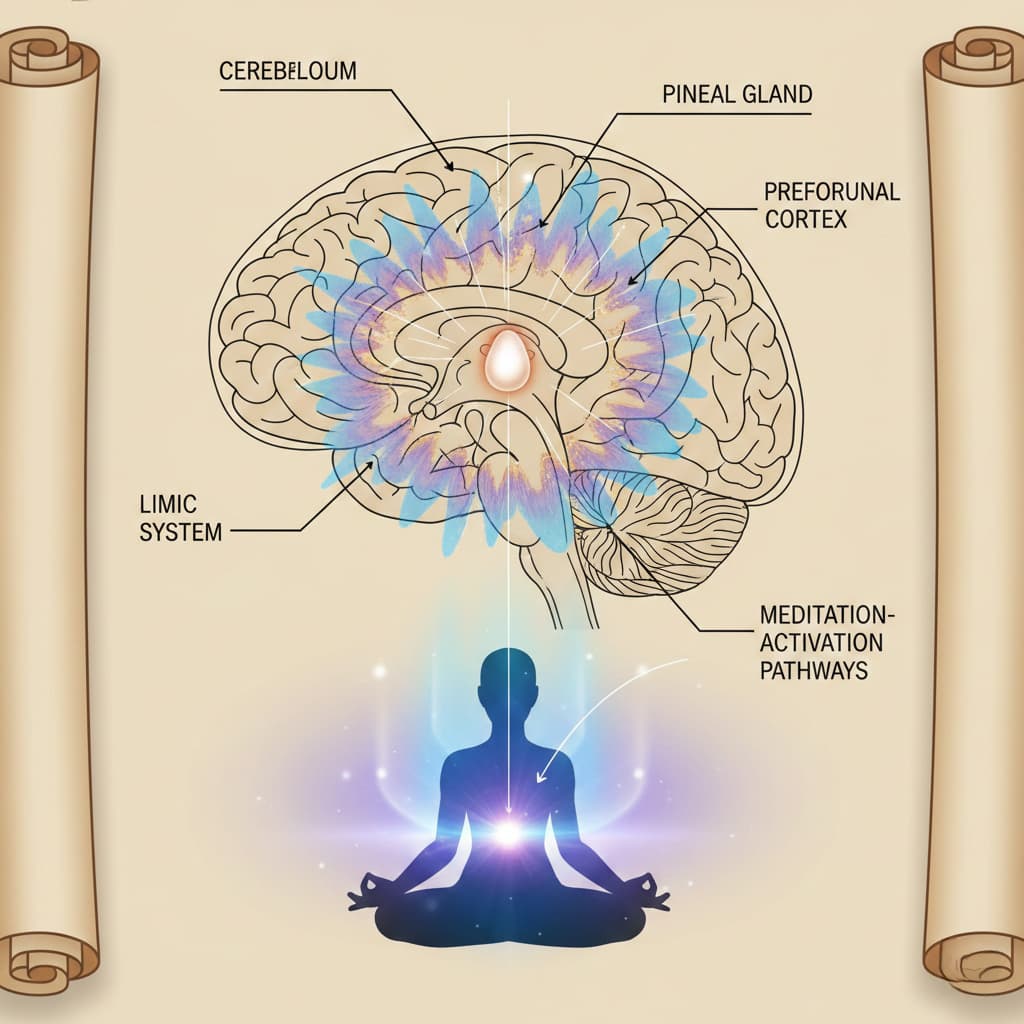
The pineal gland sits in the epithalamus, near the geometric center of the brain, positioned between the two hemispheres. Its location corresponds remarkably well to what spiritual traditions describe as the “third eye” position. This isn’t coincidence—ancient practitioners likely perceived this internal structure through interoceptive awareness developed through meditation.
Scientifically, the pineal gland serves as the master regulator of circadian rhythms through melatonin production, controlling when you sleep, wake, and experience optimal cognitive function throughout the day. It functions as a neuroendocrine transducer, converting neural signals into hormonal responses that affect the entire body. The gland influences neurotransmitter balance, particularly serotonin, dopamine, and acetylcholine—chemicals that determine memory, mood, focus, and consciousness.
The pineal gland produces DMT (dimethyltryptamine), a powerful endogenous psychedelic compound associated with dreams, mystical experiences, and altered states of consciousness. While controversial, research suggests the pineal may produce DMT during deep meditation, birth, death, and REM sleep. It serves as a biological interface between physical and subtle aspects of consciousness, potentially explaining why spiritual traditions have emphasized this structure for millennia.
The pineal contains photoreceptor cells similar to those in the retina, responding to light even though it’s buried deep within the brain. This “internal light sensitivity” allows it to regulate circadian rhythms and may explain why visualization and light-focused meditation techniques affect pineal function.
Why Most Pineal Glands Are Dysfunctional
Here’s the critical problem: by age 60, brain imaging shows 60-80% of people have significant pineal gland calcification. Fluoride from tap water and toothpaste accumulates in pineal tissue at higher concentrations than anywhere else in the body, forming calcium fluoride deposits. Heavy metals like mercury and aluminum also accumulate, disrupting function. Poor calcium metabolism without adequate vitamin K2 causes aberrant calcium deposits. Chronic inflammation and oxidative stress accelerate calcification.
As calcification progresses, melatonin production drops by 50-90%, sleep quality deteriorates, neurochemical balance shifts toward dysfunction, cognitive performance declines, and the gland’s responsiveness to meditation decreases substantially. A calcified pineal gland is like trying to play a musical instrument that’s been packed with concrete—the physical structure exists, but it can’t function properly.
This is why some people experience profound results from pineal meditation while others feel nothing. A healthy, decalcified pineal gland responds powerfully to meditative practices. A severely calcified gland barely responds at all. Understanding why your memory is getting worse often reveals pineal dysfunction as the root cause, and meditation alone won’t fix a gland that’s 70% calcified.
The good news is that proper meditation combined with biological support can decalcify the pineal gland over time, progressively restoring function and responsiveness to practice. But you need to understand both aspects—the meditative techniques and the biological restoration—to achieve optimal results.
The Meditation-Pineal Connection: How It Works
When you meditate with focused attention on the pineal gland area, several measurable neurological changes occur. Brain imaging studies show increased blood flow to the pineal region during focused meditation, potentially supporting decalcification and enhanced function. Changes in brainwave patterns, particularly increased theta and delta waves, correlate with altered pineal activity.
Meditation reduces stress hormones like cortisol that impair pineal function and accelerate calcification. Parasympathetic nervous system activation through meditation supports optimal pineal hormone production. The mental focus and visualization involved in pineal meditation may directly stimulate the gland through attention-mediated neural pathways that science is still working to fully understand.
Research using fMRI and EEG demonstrates that meditation produces measurable changes in brain activity patterns, neurotransmitter levels, and hormonal outputs from structures like the pineal gland. This isn’t mystical speculation—it’s documented neuroscience showing that meditative practices affect physical brain structures and their function.
Pineal Gland Meditation Techniques: Evidence-Based Practices
Now let’s explore specific meditation techniques designed to activate, stimulate, and optimize pineal gland function. These practices combine ancient wisdom with modern understanding of neuroscience.
Technique 1: Pineal Gland Focus Meditation (Foundation Practice)
This foundational technique builds direct awareness of and connection with your pineal gland through sustained attention. Find a comfortable seated position with spine erect, allowing unrestricted breathing and optimal energy flow. Close your eyes and take several deep, slow breaths to calm the nervous system and prepare for meditative focus.
Direct your attention to the center of your brain, roughly between and slightly above your eyebrows at the level of the mid-brain. This corresponds to the actual pineal gland location. Don’t strain or force—use gentle, sustained attention as if you’re listening for a subtle sound in the distance. Visualize a small, luminous sphere of soft white or violet light at this point. The color doesn’t matter as much as the focused attention and visualization.
Hold your awareness on this point for 10-20 minutes initially, gradually extending as your capacity for sustained focus improves. When your mind wanders—which it will—gently redirect attention back to the pineal point without judgment or frustration. Notice any sensations that arise: tingling, pressure, warmth, or subtle pulsation in the center of your head. These indicate increased blood flow and neural activation in the pineal region.
Practice this daily, preferably at the same time, to establish consistency. Early morning after waking or evening before sleep work particularly well because the pineal gland is naturally more active during these transition periods.
Scientific basis: Sustained attention meditation increases blood flow to focused brain regions. Studies show that regular meditation practice produces structural changes in attended areas. By directing focus to the pineal region specifically, you’re likely increasing metabolic activity, blood flow, and potentially supporting decalcification through enhanced circulation.
Technique 2: Breath-Centered Pineal Activation
This technique combines breathwork with pineal focus to enhance activation through increased oxygenation and energy. Begin with the basic pineal focus position and awareness established in Technique 1. Now coordinate your breathing with visual focus.
On each inhalation, visualize pure, white light entering through the crown of your head and gathering at your pineal gland. See this light accumulating, growing brighter and more concentrated with each breath. On each exhalation, visualize any darkness, blockages, or calcification dissolving and flowing out through your exhaled breath as dark smoke or mist. Continue this pattern for 15-20 minutes: inhale light into the pineal, exhale darkness and blockages out.
Some practitioners add a breath retention phase: inhale deeply, hold the breath for 5-10 seconds while intensely focusing on the pineal gland and visualizing it glowing brilliantly, then exhale slowly while maintaining awareness. This retention phase may increase CO2 levels, which can affect cerebral blood flow and potentially enhance the meditative state.
Scientific basis: Controlled breathing affects autonomic nervous system balance, shifting toward parasympathetic dominance that supports optimal pineal function. Breath retention temporarily increases CO2, causing vasodilation and increased cerebral blood flow. The visualization component engages neural pathways connecting conscious attention with subconscious regulatory systems.
Technique 3: Chanting and Vibrational Activation
Sound vibration affects physical structures, including the pineal gland. This ancient technique uses specific sound frequencies to stimulate pineal activation. The most commonly used sound for pineal activation is “OM” or “AUM,” which produces vibrations at approximately 136.1 Hz—a frequency some research suggests resonates with human cellular structures.
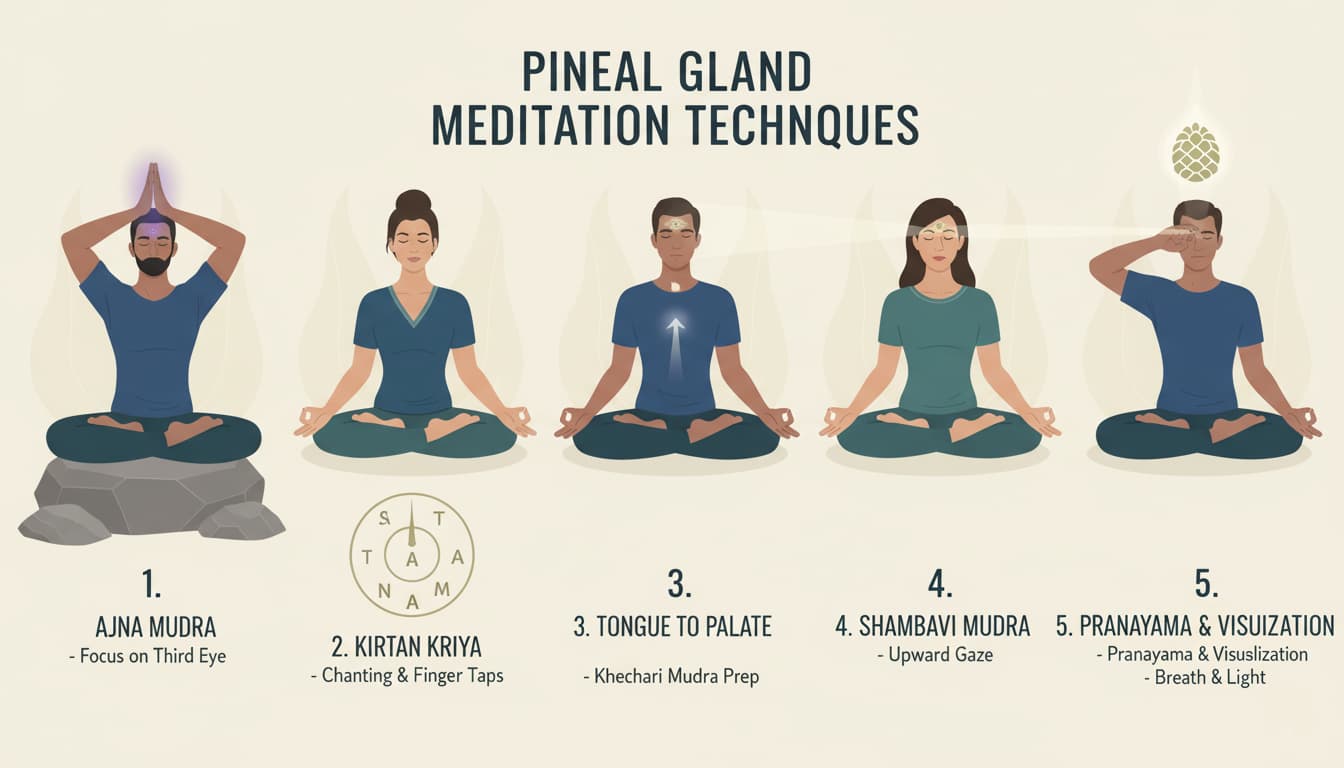
Sit in your meditation posture with attention focused on the pineal gland point. Take a deep breath and produce a long, sustained “OMMMM” sound, directing the vibration toward the center of your brain. Feel the sound resonating in your skull, particularly at the pineal region. Continue for 10-15 minutes, allowing the vibration to penetrate deeper into the brain with each repetition.
Alternative sounds include “THOH” pronounced as a single syllable with emphasis on the vibration of the “H.” Some practitioners use tuning forks tuned to 936 Hz (the “frequency of the third eye” according to some sound healing traditions) held near the head during meditation.
Scientific basis: Vibrational frequency affects physical matter at the cellular level. Research in cymatics shows that specific frequencies produce distinct effects on matter. While studies specifically measuring pineal response to chanting are limited, research on sound meditation shows measurable effects on brain activity patterns and neurochemical release. The mechanical vibration might also help dislodge calcified material through resonance.
Technique 4: Sunlight Meditation (Solar Gazing)
This advanced and potentially controversial practice involves controlled exposure to sunlight for pineal stimulation. The pineal gland contains photoreceptor cells and responds to light even though it’s located deep within the brain. Some practitioners believe controlled sun exposure can directly activate the pineal through light transmission via the retina and optic pathways.
Critical safety note: Looking directly at the sun can cause permanent eye damage. This practice should only be attempted during the first 30 minutes after sunrise or the last 30 minutes before sunset when UV radiation is minimal. Never look at the sun during mid-day or when it’s high in the sky. Start with just 10-15 seconds and never exceed 10 minutes total.
During safe hours, stand barefoot on the earth (for grounding), face the sun with eyes closed, and visualize the sunlight penetrating through your skull to illuminate your pineal gland. After 30-60 seconds with closed eyes, briefly open your eyes and look toward (not directly at) the sun for 10-15 seconds maximum, then close and rest. Repeat 3-5 times.
Alternative approach for safety: Practice sunlight meditation through closed eyelids only, never opening eyes while facing the sun. The sunlight still penetrates the eyelids and reaches the retina, potentially stimulating the pineal without eye damage risk.
Scientific basis: The retinohypothalamic tract connects the retina directly to the suprachiasmatic nucleus, which regulates the pineal gland’s circadian rhythms. Light exposure, particularly at specific times of day, directly affects pineal melatonin production. Morning sunlight exposure has been shown to improve circadian rhythm and sleep quality by optimizing pineal function. However, the direct sun-gazing aspect lacks strong scientific support and carries real risks.
Technique 5: Third Eye Chakra Meditation
This traditional yogic practice focuses on the ajna chakra (third eye) which corresponds anatomically to the pineal gland location. Sit comfortably with spine straight and eyes closed. Bring your attention to the point between your eyebrows (the third eye point). Visualize an indigo or deep purple sphere of light at this location, rotating slowly.
As you hold this visualization, mentally chant “OM” or “KSHAM” (the seed mantra for the third eye chakra). Direct all your awareness into this point, as if your entire consciousness is condensing into this single focal point. Maintain this focused concentration for 20-30 minutes.
Advanced practitioners add visualization of energy moving up the spine through each chakra point, culminating in the third eye, then extending upward through the crown chakra, creating a circuit of energy that activates and energizes the pineal gland.
Scientific basis: While the chakra system itself isn’t recognized in Western medicine, the anatomical locations of major chakras correspond to important neural and endocrine structures. The third eye chakra corresponds to the pineal gland location. Concentration meditation produces measurable changes in brain activity, particularly increased gamma wave activity associated with heightened awareness and cognitive integration.
Optimizing Pineal Meditation: Enhancing Biological Function
Meditation techniques work best when the pineal gland is biologically healthy enough to respond. A severely calcified gland simply can’t produce the neurochemical and hormonal changes that meditation aims to stimulate. This section covers biological optimization that dramatically enhances meditation effectiveness.
Decalcification: Removing Physical Blockages
Before your pineal gland can respond optimally to meditation, you need to address calcification. The first step is eliminating fluoride exposure immediately by switching to fluoride-free toothpaste, installing a reverse osmosis water filter, avoiding processed foods made with fluoridated water, and choosing organic tea over conventional black tea that accumulates fluoride.
Active decalcification requires specific compounds. Tamarind extract has been shown in research to significantly increase fluoride excretion from the body, potentially reversing pineal calcification. Studies published in the European Journal of Clinical Nutrition demonstrate tamarind’s fluoride-removing properties. Chlorella, a single-celled algae, binds heavy metals and toxins including fluoride, facilitating their removal. Research confirms its chelation effectiveness for mercury, lead, and other metals that accumulate in the pineal gland.
Apple cider vinegar and raw, unprocessed apple juice contain malic acid that may help dissolve calcium deposits, though research is less definitive than for tamarind. Vitamin K2 (as MK-7) directs calcium to bones rather than soft tissues, preventing further calcification and potentially supporting removal of existing deposits. Magnesium works synergistically with K2 to optimize calcium metabolism.
Iodine supplementation can help displace fluoride from tissues through competitive inhibition since both are halides competing for the same cellular receptors. Borax (sodium borate) is controversial but has some evidence for fluoride detoxification, though this should only be attempted under practitioner guidance due to potential toxicity.
The decalcification process takes time—typically 3-6 months of consistent supplementation to see measurable reductions in calcification. As decalcification progresses, your pineal gland becomes progressively more responsive to meditation practices. Understanding foods that damage the pineal gland helps you avoid further calcification while working to reverse existing damage.
Nutritional Support for Optimal Pineal Function
Beyond decalcification, specific nutrients support optimal pineal gland function and enhance meditation effectiveness. Tryptophan and 5-HTP serve as precursors to serotonin, which the pineal converts to melatonin. Adequate intake supports this conversion process. Vitamin B6 is essential for the enzymatic conversion of serotonin to melatonin—deficiency directly impairs pineal melatonin production.
Magnesium supports the conversion process and has been shown to enhance meditation depth and relaxation. Zinc affects pineal hormone production and protects against heavy metal accumulation. Selenium provides antioxidant protection to the pineal gland, which is vulnerable to oxidative stress due to its high metabolic activity and lipid content.
Omega-3 fatty acids (DHA and EPA) incorporate into pineal cell membranes, affecting fluidity and function. Research shows omega-3 supplementation improves melatonin production and sleep quality. Antioxidants including pine bark extract, resveratrol, and curcumin protect pineal tissue from oxidative damage and inflammation that impair function and accelerate calcification.
Lifestyle Factors That Enhance Pineal Meditation
Certain lifestyle practices dramatically improve both pineal gland health and meditation effectiveness. Strict circadian rhythm regularity is crucial—wake and sleep at consistent times, get bright light exposure in the morning to signal day to the pineal, ensure complete darkness at night (even small amounts of light suppress melatonin), and avoid blue light from screens 2-3 hours before sleep.
Minimize EMF exposure, particularly during sleep, as electromagnetic fields may interfere with pineal function. Keep phones, WiFi routers, and electronic devices away from your sleeping area. Practice regular fasting or time-restricted eating, which has been shown to enhance autophagy (cellular cleanup) and may support pineal decalcification. Intermittent fasting also affects circadian rhythms and melatonin production.
Avoid substances that impair pineal function, including alcohol, which disrupts sleep architecture and melatonin production; caffeine late in the day, which interferes with the natural melatonin rhythm; and unnecessary medications that affect neurochemistry. Exercise regularly but not close to bedtime, as physical activity affects circadian rhythm and can enhance meditation depth through improved stress resilience and neuroplasticity.
The science behind brain health shows that comprehensive lifestyle optimization multiplies the effectiveness of targeted practices like meditation.
The Synergy of Meditation and Biological Support
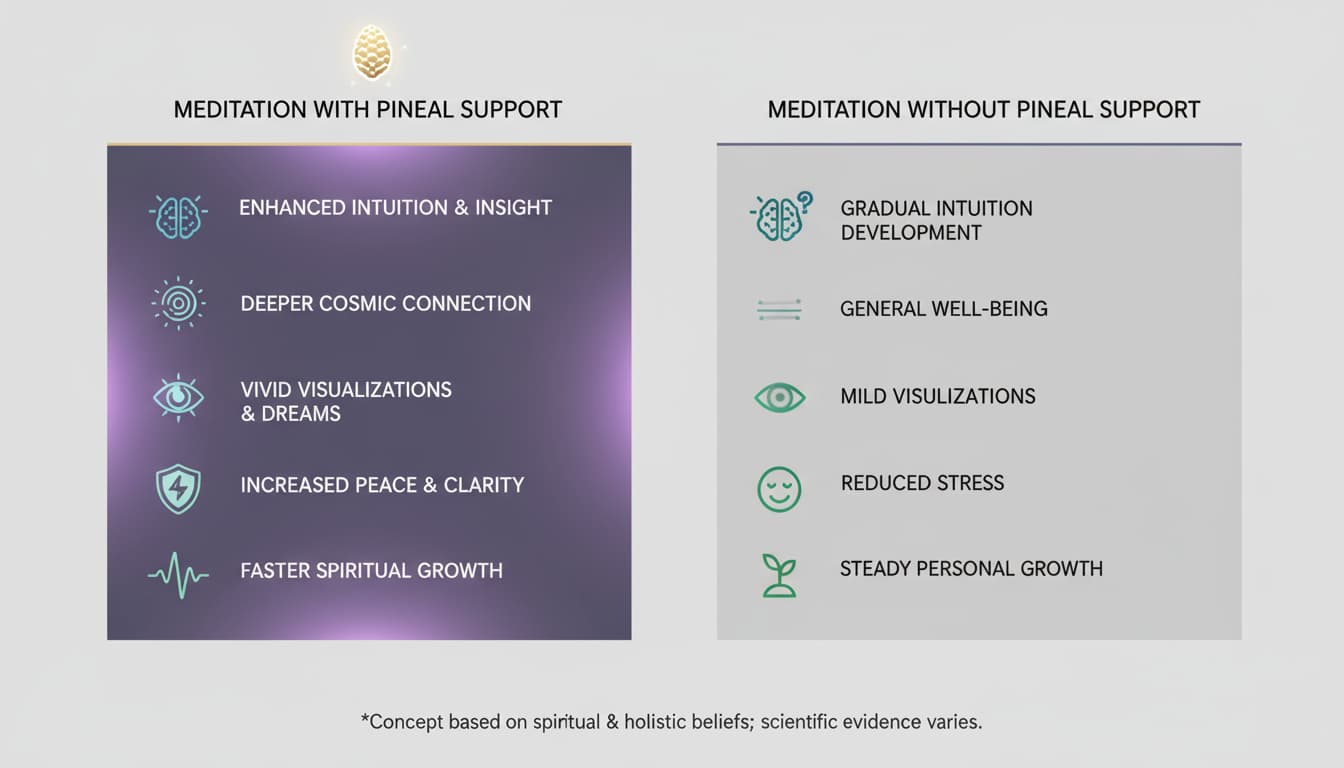
Here’s what most people miss: meditation alone works slowly on a calcified pineal gland, while biological support alone lacks the focused neural activation that meditation provides. The combination produces results neither approach achieves independently.
Meditation directs conscious attention and neural activity to the pineal gland, potentially enhancing blood flow, metabolic activity, and clearing of calcified material. Biological support provides the nutrients, decalcification compounds, and optimal conditions needed for the pineal to respond to meditative stimulation. Together, they create a positive feedback loop where each enhances the other’s effectiveness.
This is why comprehensive formulations designed specifically for pineal health can dramatically accelerate results when combined with meditation practice. Rather than sourcing a dozen separate supplements and hoping they work together, a scientifically formulated solution addresses all biological factors simultaneously.
Pineal Guardian provides targeted support including tamarind for fluoride removal and active decalcification, chlorella for heavy metal detoxification, pine bark extract for powerful antioxidant neuroprotection, ginkgo biloba for enhanced cerebral blood flow, spirulina for neurotransmitter precursors and antioxidants, lion’s mane for neurogenesis and nerve growth factor stimulation, and bacopa monnieri for memory enhancement and cognitive support.
When combined with regular pineal meditation practice, these biological supports create optimal conditions for pineal activation and function. User experiences with comprehensive pineal support consistently show that meditation becomes noticeably deeper and more effective as the gland decalcifies and restores function.
Advanced Pineal Meditation: Deepening Your Practice
Once you’ve established a foundation with basic techniques and begun biological optimization, you can explore advanced practices that take pineal activation to deeper levels.
Extended Duration Sessions
As your concentration capacity improves, extend meditation sessions from 20-30 minutes to 60-90 minutes. Longer sessions allow deeper states of consciousness and more profound pineal activation. The first 20 minutes often involve settling the mind and establishing focus. The period from 20-60 minutes is where deeper activation typically occurs. Beyond 60 minutes, some practitioners report experiences of expanded consciousness, profound peace, or even mystical states potentially related to endogenous DMT release from the pineal gland.
For extended sessions, ensure physical comfort so the body doesn’t become a distraction. Use meditation cushions, chairs, or back support as needed. Set a gentle timer to avoid clock-watching, which disrupts meditative depth.
Darkness Meditation Retreats
Extended time in complete darkness can profoundly affect pineal gland function and consciousness. Darkness retreats involve spending 3-14 days in absolutely light-free environments. This complete absence of light causes the pineal to shift into altered production patterns, potentially producing DMT and other compounds associated with mystical experiences and deep meditative states.
During darkness retreats, practitioners report vivid visions, profound insights, emotional releases, altered states of consciousness, and sometimes spontaneous third eye activation experiences. The scientific basis relates to the pineal gland’s light sensitivity—removing all light input allows it to function in ways not possible during normal light-dark cycles.
Darkness retreats should be undertaken with proper facility, guidance, and preparation. They’re advanced practices not suitable for beginners. However, even one night of complete darkness meditation at home can provide a taste of how darkness affects pineal function and meditative depth.
Pineal Gland Meditation Combined with Breathwork
Combining pineal meditation with advanced breathwork techniques can intensify effects. Wim Hof method breathing involves cycles of deep, rapid breathing followed by breath retention. This dramatically affects blood CO2 and pH, altering consciousness and potentially affecting pineal activity.
Alternate nostril breathing (nadi shodhana) balances the sympathetic and parasympathetic nervous systems while focusing awareness on the third eye point. Research shows this practice affects heart rate variability and autonomic balance in ways that may optimize pineal function.
Kundalini breathing techniques specifically designed to move energy up the spine to activate higher chakras including the third eye can be powerful when practiced correctly, though they should be learned from qualified teachers to avoid potential negative effects from improper practice.
Group Meditation for Amplified Effects
Some practitioners report that group meditation focused on pineal activation produces amplified effects compared to solo practice. The potential mechanisms include coherent brainwave entrainment when multiple people meditate together, focused collective intention creating measurable effects (as suggested by some consciousness research), shared energy or electromagnetic field effects, and the psychological support and accountability of group practice enhancing consistency.
Whether these effects are “real” in a mechanistic sense or primarily psychological doesn’t matter—if group practice enhances your experience and results, it’s worth incorporating.
Integrating Other Consciousness Practices
Pineal meditation can be enhanced by integration with complementary practices including yoga, particularly inversions that increase blood flow to the head and potentially the pineal gland; qigong energy cultivation practices that work with the body’s subtle energy systems and the “upper dan tien” (third eye area); and lucid dreaming practice, which may relate to pineal DMT production and can be enhanced through pineal-focused meditation before sleep.
Some practitioners report that microdosing psychedelics (where legal and appropriate) combined with pineal meditation produces particularly powerful activation experiences, though this controversial approach requires careful consideration of legal, health, and ethical factors.
Expected Results: Realistic Timeline and Experiences
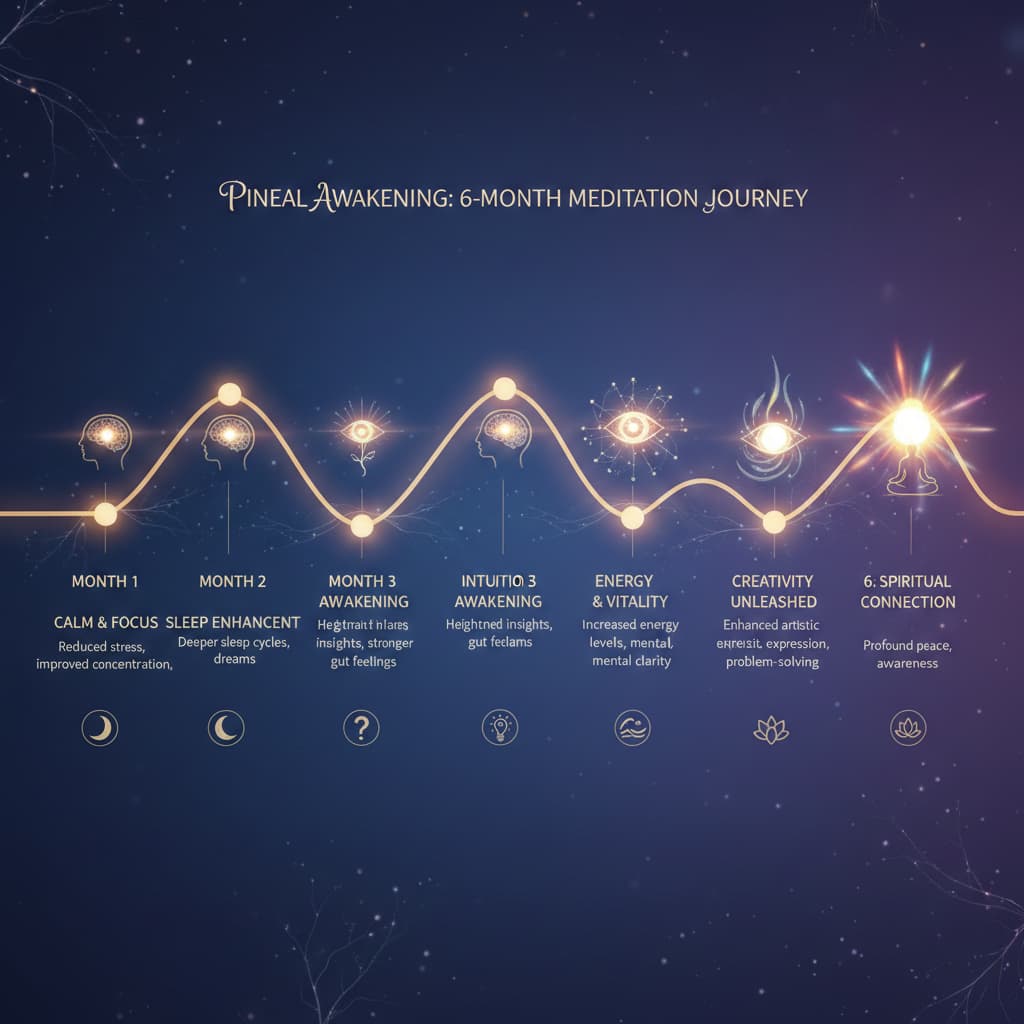
Understanding what to expect and when helps maintain motivation and recognize genuine progress. Here’s the typical timeline for pineal meditation results, though individual experiences vary based on starting pineal health, consistency of practice, and whether you’re combining meditation with biological support.
Weeks 1-2: Foundation Building
Initial experiences during the first two weeks include improved ability to focus and sustain attention, mild sensations of pressure, tingling, or warmth at the third eye point, slightly better sleep quality as meditation begins affecting stress levels and circadian rhythm, increased awareness of your internal state and subtle bodily sensations, and possibly mild headaches as increased blood flow to the area causes adjustment (usually resolves within a week).
These early experiences indicate that you’re affecting the targeted brain region through focused attention. Don’t expect dramatic mystical experiences immediately—you’re building the foundation for deeper work.
Weeks 3-6: Activation Signs
As practice deepens and if you’re supporting biological decalcification, you may experience more pronounced pressure or pulsation sensation at the third eye point during meditation, spontaneous visions or inner light phenomena with closed eyes, improved dream recall and possibly more vivid dreams, noticeably better sleep quality and feeling more rested, enhanced intuition or subtle knowing, and beginning improvements in memory and mental clarity.
These signs indicate increasing pineal gland activation and responsiveness to your practice. The experiences vary widely between individuals—some people have vivid visions, others simply feel deep peace and clarity.
Months 2-3: Deepening Practice
With consistent practice over 2-3 months, especially with biological support for decalcification, deeper changes emerge including substantially improved meditation depth with easier access to deeply calm states, strong, consistent sensations at the third eye point, significantly enhanced sleep quality and dream states, noticeable cognitive improvements—better memory, focus, and mental clarity, increased sense of connection, meaning, or spiritual awareness, and possible spontaneous meditative states arising during daily activities.
By this point, if you’re practicing consistently and supporting pineal health biologically, you should experience clear evidence that your practice is working. Common memory mistakes often correct themselves as pineal function improves through this combined approach.
Months 3-6: Transformation
The 3-6 month mark often brings transformative experiences for dedicated practitioners including profound meditative states characterized by expanded awareness, unity consciousness, or bliss, dramatic improvements in cognitive function—memory, creativity, and problem-solving, significantly enhanced intuition and ability to read subtle cues, possible mystical or transcendent experiences during deep meditation, and permanent positive shifts in baseline consciousness and wellbeing.
These advanced results require consistent practice, typically daily meditation of 30-60 minutes plus addressing pineal calcification and supporting biological function. They’re achievable but not automatic—they represent the fruits of dedicated practice combined with optimal biological conditions.
Long-Term Practice: Ongoing Evolution
Practitioners who maintain consistent pineal meditation for years report continued evolution including progressive deepening of meditative capacity, sustained high-level cognitive function even as they age, enhanced creativity, insight, and problem-solving abilities, profound sense of peace, purpose, and wellbeing, and possible development of what some traditions describe as “siddhis” or enhanced perceptual capacities.
Whether these represent genuine expansion of human consciousness or simply optimal brain function doesn’t really matter—the practical benefits on cognition, wellbeing, and life quality are substantial and well worth the investment in practice.
Common Challenges and How to Overcome Them
Most people encounter obstacles in their pineal meditation practice. Understanding common challenges and their solutions helps you persist through difficulties rather than giving up prematurely.
Challenge 1: Inability to Focus or Constant Mind Wandering
This is the most common challenge, especially for beginners. The solution is to understand that mind wandering is normal and expected—meditation isn’t about having a perfectly quiet mind but about noticing when the mind wanders and gently redirecting attention. Start with shorter sessions (10-15 minutes) and gradually extend duration as concentration capacity builds. Use anchor techniques like counting breaths or using a mantra to provide a concrete focus point.
Consider breath-focused meditation to build concentration before attempting pineal-specific practices. The breath is easier to focus on than an internal point. Accept that some days will be easier than others—consistency over time matters more than perfect individual sessions.
Challenge 2: Physical Discomfort During Meditation
Physical discomfort breaks concentration and makes sustained practice difficult. Ensure proper posture with spine erect but not rigid, allowing natural curves. Use meditation cushions, chairs, or back support—don’t force uncomfortable positions in the name of tradition. Practice gentle stretching or yoga before meditation to release physical tension. For severe discomfort, address underlying issues like tight hips or back problems through appropriate exercise or therapy.
Remember that the goal is to maintain alert awareness, not to endure physical pain that distracts from the practice.
Challenge 3: No Sensations or Experiences
Some practitioners become discouraged when they don’t feel the tingling, pressure, or visions others describe. Remember that lack of dramatic sensations doesn’t mean lack of effect—subtle changes in stress, sleep, and cognition may be occurring without obvious perceptual signs. Calcification level matters—severely calcified pineal glands respond slowly until decalcification progresses. Consider whether you’re supporting biological pineal health through nutrition and decalcification.
Try different techniques—what doesn’t work for one person may work for another. Focus on consistency over immediate results. The benefits accumulate gradually over weeks and months.
Challenge 4: Inconsistent Practice
Life gets busy, motivation wanes, and practice becomes sporadic. The solution is to schedule meditation at the same time daily, making it a non-negotiable appointment with yourself. Start with a duration you can sustain consistently rather than ambitious sessions you can’t maintain. Track your practice with a meditation journal or app for accountability and to observe patterns.
Join a meditation group for social support and accountability. Remember your why—clarify the reasons you’re practicing pineal meditation and return to them when motivation fades. Consider that this is perhaps the most important thing you can do for your cognitive health and consciousness—prioritize accordingly.
Challenge 5: Expecting Quick Results
Modern culture conditions us to expect immediate results, but meaningful change in consciousness and pineal function takes time. Adjust expectations to realistic timelines—weeks for initial benefits, months for substantial changes. Focus on the practice itself rather than only on results. The meditative state has inherent value beyond the goal of pineal activation.
Combine meditation with biological support (decalcification, nutrition) to accelerate results realistically. Trust the process—thousands of years of tradition plus modern neuroscience confirm that these practices work when applied consistently over time.
Your Pineal Meditation Journey: Taking Action
You now understand the scientific basis for pineal gland meditation, have specific techniques you can begin implementing immediately, know how to optimize biological pineal function to enhance meditation effectiveness, and have realistic expectations for the timeline and nature of results.
The question is whether you’ll act on this knowledge or let it remain theoretical information that doesn’t translate into actual practice and real benefits in your life.
Pineal gland meditation offers profound benefits that extend far beyond the time spent in formal practice. Enhanced cognitive function, including dramatically improved memory, focus, and mental clarity. Better sleep quality and optimal circadian rhythm leading to more energy and better health. Reduced stress and enhanced emotional regulation through improved neurochemical balance. Expanded consciousness and potential spiritual development. Protection against cognitive decline and support for long-term brain health.
These benefits accumulate progressively over time with consistent practice combined with biological optimization of pineal health.
Your Action Plan
Start your pineal meditation journey today with this systematic approach. Begin with foundational technique—practice the basic pineal focus meditation for 10-20 minutes daily for the first two weeks. Establish consistent timing—choose a specific time daily for practice and protect that time consistently. Address fluoride exposure immediately—switch to fluoride-free toothpaste and filtered water today, not tomorrow.
Begin active decalcification and nutritional support for biological optimization. Consider whether comprehensive formulations like Pineal Guardian might accelerate your results by addressing all biological factors simultaneously while you establish your meditation practice. Track your practice and results using a meditation journal to document experiences, challenges, and gradual improvements over time.
Gradually expand practice by adding additional techniques, extending session duration, and deepening your understanding through continued learning and experimentation.
The combination of consistent meditation practice with biological optimization produces results that neither approach achieves alone. While meditation can slowly affect pineal function, biological support dramatically accelerates the process by decalcifying the gland and providing optimal conditions for the neural activation that meditation produces.
Visit PureFocusLife.fun to explore comprehensive information about pineal gland health, understand how biological support enhances meditation effectiveness, read testimonials from practitioners who’ve combined these approaches, and learn about the science-backed formula designed specifically for pineal optimization.
When you’re ready to support your meditation practice with comprehensive biological optimization, order Pineal Guardian from the official source and experience how decalcification and nutritional support can transform your meditation depth and results.
Final Thoughts: Meditation as Gateway to Optimal Consciousness
Pineal gland meditation represents more than just another meditation technique or health practice. It’s a direct method for optimizing the master regulator of consciousness, cognition, and neurochemical balance. It bridges ancient spiritual wisdom with modern neuroscience, offering a path to enhanced mental function and expanded awareness.
The pineal gland controls approximately 80% of your memory function, determines your sleep quality and circadian rhythm, regulates the neurochemical balance underlying mood and cognition, and potentially serves as the interface between ordinary and expanded states of consciousness.
When this tiny organ is calcified and dysfunctional—as it is in most people over 40—meditation becomes difficult, cognition suffers, sleep deteriorates, and access to deeper states of consciousness becomes blocked. When the pineal is decalcified, healthy, and optimized through both meditation and biological support, the transformation can be extraordinary.
The path is clear. The techniques are available. The biological support exists. The only variable is your commitment to practice and optimization.
Don’t wait for cognitive decline to become severe. Don’t accept that meditation “just doesn’t work for you” without first addressing whether pineal calcification is blocking your progress. Don’t settle for mediocre results when combining meditation with biological optimization could transform your experience.
Your pineal gland is waiting to be activated .Give it the focused attention through meditation and the biological support through decalcification and nutrition. Experience the cognitive enhancement, expanded consciousness, and optimal wellbeing that proper pineal function makes possible.
Begin your meditation practice today. Support it with biological optimization. Trust the process, maintain consistency, and observe how your consciousness evolves over weeks and months of dedicated practice.
The ancient practitioners who developed these techniques understood something profound about human consciousness and its relationship to this tiny gland. Modern neuroscience is now confirming what they discovered through direct experience thousands of years ago.
You have the opportunity to access both streams of knowledge—ancient meditative wisdom and modern scientific understanding. Use them together for results that honor both traditions and produce tangible benefits in your daily life.
Your journey to pineal activation and optimal consciousness begins with a single meditation session. Take that first step today. Your brain, your consciousness, and your future self will thank you.
Get Your FREE Brain Health Guide
Download "7 Secrets to Brain Health" before you buy • Learn the science-backed strategies • No credit card required
Ready to Restore Your Memory?
Join thousands of people over 50 who have transformed their cognitive health with Pineal Guardian. Experience the mental clarity you deserve.
Share this article: