Pineal Gland Guided Meditation: Step-by-Step Third Eye Activation
Pineal Gland Guided Meditation: Step-by-Step Third Eye Activation
1/5/2026 • By Dr. Sarah Mitchell, Neuroscience Researcher

Guided meditation for pineal gland activation combines ancient spiritual wisdom with modern neuroscience to create one of the most powerful practices for enhancing cognitive function, deepening consciousness, and restoring the master gland that controls 80% of your memory and mental clarity.
Unlike silent meditation where you’re left to figure out what to do, guided meditation provides clear, step-by-step instructions that walk you through the entire process. This is especially valuable for pineal gland work because most people have never learned to direct focused attention to this specific brain region or use visualization techniques that actually stimulate the gland’s function.
This comprehensive guide provides everything you need for effective pineal gland guided meditation including a complete guided meditation script you can follow or record, the scientific basis for why these techniques work, proper preparation to maximize effectiveness, and realistic expectations for results over time. Whether you’re a complete beginner or experienced meditator, this guide will deepen your practice and accelerate pineal activation.
Understanding Pineal Gland Guided Meditation
Before diving into the practice itself, understanding what makes pineal-focused guided meditation different from general meditation helps you approach it with appropriate intention and technique.
What Makes This Practice Unique
Standard meditation often focuses on breath awareness, body scanning, or general mindfulness. Pineal gland guided meditation is specifically targeted—you’re directing conscious attention and visualization to activate a particular brain structure that serves as the master regulator of neurochemistry, consciousness, and cognitive function.
The pineal gland sits in the epithalamus, near the geometric center of your brain. This location corresponds remarkably to what spiritual traditions call the “third eye”—not coincidentally, but because ancient practitioners likely perceived this internal structure through interoceptive awareness developed through meditation. Modern neuroscience confirms that this tiny gland produces melatonin, regulates circadian rhythms, influences neurotransmitter balance, affects consciousness through DMT and other compounds, and controls the neurochemical environment essential for memory and cognition.
Guided meditation for the pineal gland uses specific techniques including focused attention on the mid-brain location where the gland sits, visualization of light or energy to stimulate the gland, breathwork coordinated with visualization to enhance activation, sound vibration through chanting or toning, and progressive deepening that allows sustained focus on this specific region.
The guidance aspect is crucial because maintaining sustained attention on an internal point you can’t directly perceive requires instruction and reminders. Without guidance, attention wanders constantly. With clear guidance, you can maintain focus long enough for measurable effects to occur.
The Science Behind Guided Pineal Meditation
When you direct focused attention to a specific brain region during meditation, measurable changes occur. Brain imaging studies show increased blood flow to attended areas, changes in neural activity patterns visible on EEG and fMRI, altered brainwave states particularly increased theta and delta waves, and modified neurotransmitter release in response to sustained attention.
For the pineal gland specifically, meditation produces reduced stress hormones that otherwise impair pineal function, enhanced melatonin production and circadian regulation, potential stimulation of DMT release associated with mystical experiences, and improved neurochemical balance affecting memory and cognition. The visualization component engages neural pathways connecting conscious intention with subconscious regulatory systems, potentially allowing voluntary influence over normally autonomic processes.
Research demonstrates that regular meditation practice produces structural brain changes, improved cognitive function, enhanced neuroplasticity, and optimized hormonal balance. When meditation specifically targets the pineal gland, these effects concentrate on the master regulator that controls the entire neurochemical system. Understanding the science behind brain health reveals why targeted practices produce more dramatic results than general wellness approaches.
The critical factor most people miss: guided meditation works best on a healthy, decalcified pineal gland. If your pineal is 70% calcified from years of fluoride accumulation, heavy metals, and calcium deposits, it simply can’t respond optimally to meditative stimulation. Combining meditation with active decalcification and biological support produces results that meditation alone cannot match.
Preparing for Pineal Gland Guided Meditation
Proper preparation dramatically enhances meditation effectiveness. These steps create optimal conditions for deep practice and pineal activation.
Physical Environment Setup
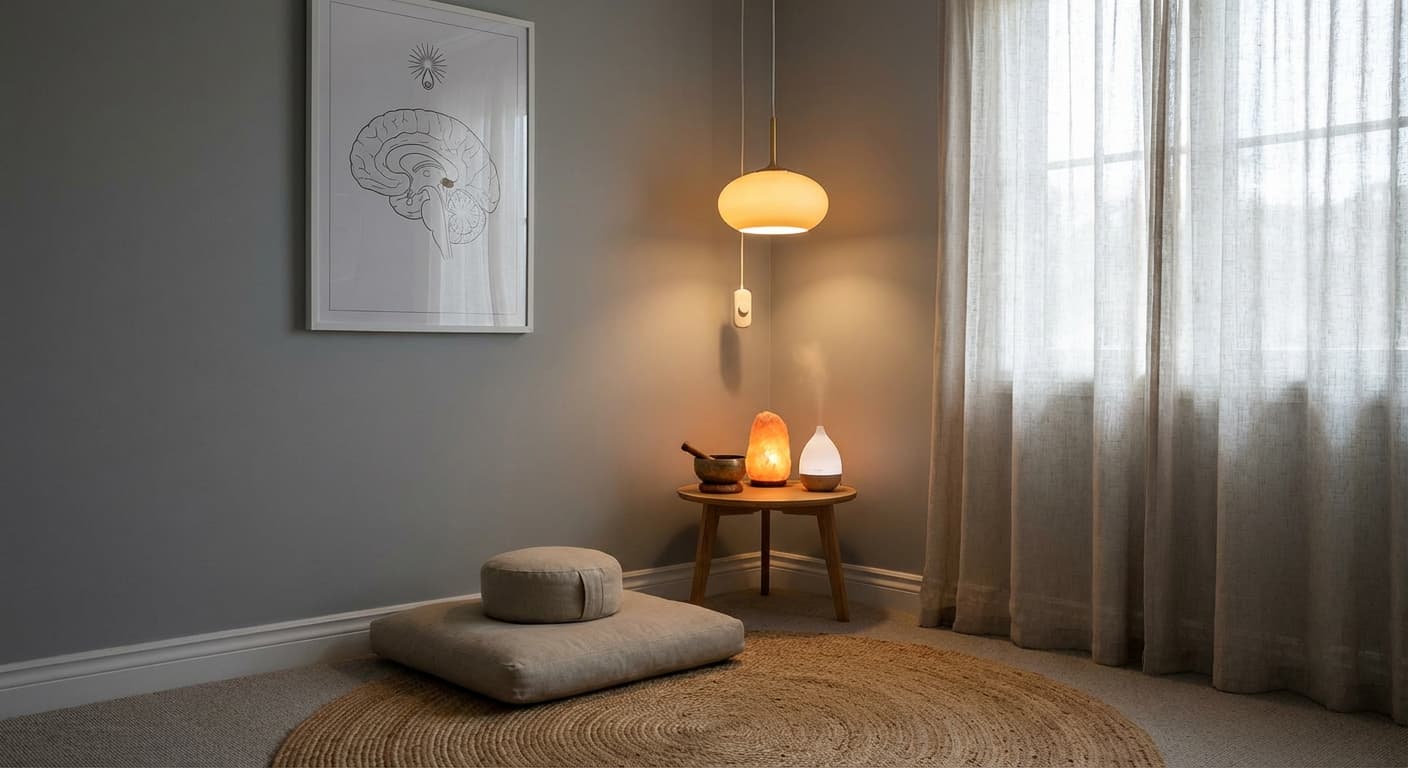
Choose a quiet space where you won’t be interrupted for at least 30 minutes. Turn off phones, notifications, and potential disruptions. Dim or turn off bright lights—soft, warm lighting or darkness works best for pineal meditation since the gland responds to light levels. Ensure comfortable temperature so you won’t be distracted by being too hot or cold during practice.
Set up comfortable seating with spine erect but not rigid. Use meditation cushions, a chair with back support, or even lying down if needed, though seated positions help maintain alertness better than lying. Consider using headphones if you’ll be listening to recorded guidance, as they enhance immersion and block external sounds.
Some practitioners enhance the environment with candles for soft lighting and focal point, incense or essential oils like frankincense or sandalwood traditionally associated with third eye work, or crystals placed nearby, particularly amethyst or clear quartz which some believe enhance pineal activation (though scientific evidence is limited).
Physical Preparation
Avoid heavy meals 2-3 hours before meditation, as digestion can make you drowsy and pulls blood flow away from the brain. Light hydration is good, but don’t drink excessive amounts that would require bathroom breaks mid-session. Consider gentle stretching or yoga before meditation to release physical tension that could become distracting. This also helps energy flow and prepares the body for stillness.
If you’re significantly decalcified or have been working on pineal health, you may notice that meditation becomes progressively easier and deeper as your gland restores function. Many people find that meditation combined with targeted biological support creates a positive feedback loop—each enhances the other’s effectiveness.
Mental Preparation
Set a clear intention for your practice. Are you seeking cognitive enhancement, spiritual development, stress relief, or pineal activation specifically? Intention focuses your subconscious mind and enhances meditation depth. Review the guided meditation script beforehand so you’re familiar with the structure and aren’t surprised by instructions. Let go of expectations about dramatic experiences—some sessions will feel profound, others ordinary. Both are valuable.
Commit to consistency over intensity. A daily 20-minute practice produces better long-term results than sporadic 90-minute sessions. Consider the time you’re investing as essential maintenance for your brain’s master regulator, not an optional luxury when you happen to have free time.
Complete Pineal Gland Guided Meditation Script
This guided meditation script is designed for 20-30 minutes. You can read through it several times to internalize the structure, record yourself reading it to play back, or have someone else guide you through it. Adjust pacing as needed—pause longer than feels natural when reading, as silence during actual practice should be longer than the guidance.
Opening: Settling and Grounding (5 minutes)
Begin by finding your comfortable seated position. Sit with your spine erect but not rigid, allowing the natural curves of your spine. Your head is balanced naturally atop your spine, chin very slightly tucked. Hands rest comfortably on your knees or in your lap. Feel the weight of your body settling into the cushion or chair beneath you.
Close your eyes gently. Take a deep, slow breath in through your nose, filling your lungs completely. Hold for a moment at the top of the breath. Then exhale slowly through your mouth, releasing any tension, stress, or mental preoccupation. Again, breathe in deeply… and release completely.
Continue breathing naturally now, but maintain awareness of each breath. Feel the cool air entering your nostrils on the inhalation. Feel the warm air flowing out on the exhalation. Let each breath anchor you more deeply into this present moment, releasing thoughts about the past or future.
Bring awareness to your body. Notice any areas of tension—perhaps in your shoulders, jaw, or forehead. Without judgment, simply acknowledge these sensations. With each exhalation, imagine these areas softening, releasing, letting go. Your body becomes progressively more relaxed while your spine remains comfortably erect.
Take three more deep, conscious breaths. With each exhalation, release more tension, more mental activity, more distraction. You’re creating space for deep inner work, for connection with the most profound aspects of your consciousness.
Focusing Attention: The Third Eye Point (3-5 minutes)
Now bring your awareness to the center of your head, to the space between and slightly above your eyebrows. This is the location of your pineal gland—the master regulator of your brain’s chemistry, the ancient “third eye” that spiritual traditions have honored for millennia.
Don’t strain or force your attention. Simply rest your awareness gently at this point, as if you’re listening for a subtle sound in the distance. The center of your brain becomes the center of your awareness.
As you hold attention here, you may notice sensations beginning to arise—perhaps a subtle tingling, a feeling of pressure or density, a warmth spreading through this region. Simply observe whatever arises without grasping or pushing away. These sensations indicate increased blood flow and neural activation in your pineal region.
If your mind wanders—which it will, as this is the nature of mind—simply notice where it’s gone, and gently guide your attention back to the center point. Each time you return, you strengthen your capacity for sustained focus. This returning is the practice itself.
Continue resting your awareness at your pineal gland, breathing naturally, observing whatever sensations arise. You’re beginning to activate the most important gland in your brain, the master controller of your consciousness and cognition.
Visualization: Activating the Pineal Gland (10-12 minutes)
Now we’ll add visualization to enhance activation. Continue holding awareness at your third eye point, and begin to visualize a small sphere of soft, luminous light at this location. Choose the color that feels right to you—perhaps violet or indigo, associated traditionally with the third eye; or pure white light; or even golden light.
See this sphere of light glowing gently at the center of your brain. It’s about the size of a pea or small grape—the actual size of your pineal gland. This light represents your gland’s pure, uncalcified state, functioning optimally, radiating energy throughout your brain.
With each inhalation, imagine pure, cleansing light entering through the crown of your head and gathering at your pineal gland. This light carries healing energy, nutrients, oxygen—everything your pineal needs to function optimally. See the luminous sphere growing slightly brighter with each breath in.
With each exhalation, visualize any darkness, blockages, or calcification dissolving and flowing out of your pineal gland. See it flowing down through your body and out through your feet, or dissipating like dark smoke on your exhaled breath. Years of accumulated fluoride, calcium deposits, and toxic material dissolving and releasing with each breath out.
Continue this breathing visualization: Inhale pure, healing light into your pineal gland. Exhale blockages, calcification, and darkness out. Light in, darkness out. Energy in, toxins out. With each cycle, your pineal gland becomes progressively clearer, cleaner, more activated.
Now visualize your pineal gland beginning to pulse gently with light, like a heart beating or a star radiating. With each pulse, waves of light spread throughout your entire brain. These waves of light represent optimal neurochemistry—perfect balance of melatonin, serotonin, dopamine, and all the compounds your brain needs for clarity, memory, and consciousness.
Feel this pulsing light reaching your hippocampus, enhancing memory formation. Spreading to your prefrontal cortex, enhancing focus and decision-making. Flowing through your entire brain, optimizing every neural network, clearing away fog and confusion, restoring the sharp clarity you may not have experienced in years.
Your pineal gland is fully activated now, glowing brilliantly at the center of your brain, pulsing with life-giving light, radiating optimal function throughout your entire nervous system. Rest in this state of activation. Simply be with the sensations, the light, the energy. You’re experiencing your brain’s master regulator functioning as it was designed to function.
If thoughts arise, acknowledge them gently and return attention to the glowing pineal gland, the pulsing light, the spreading waves of optimal neurochemistry. Continue for several more minutes in silence, deepening your connection with this vital gland.
[Silence for 3-5 minutes]
Integration and Closing (3-5 minutes)
Begin to gradually expand your awareness now, while maintaining a connection with your activated pineal gland. Feel the light that has spread throughout your brain. Notice the sensations in your body—perhaps tingling, warmth, energy, or deep relaxation.
Take a deep, conscious breath, drawing in this activated state. As you exhale, imagine anchoring this experience deeply within your cellular memory. Your body remembers this state of optimal pineal function. Your nervous system is learning to maintain this activation.
Set an intention now to carry this clarity, this connection, this activated state with you as you return to your day. Though you’re ending the formal practice, the effects continue. Your pineal gland has been stimulated, blood flow has increased, neural pathways have been activated. These effects persist hours after you finish.
Slowly, begin to bring small movements back into your body. Wiggle your fingers and toes gently. Roll your shoulders. Take a full, expansive breath and stretch your arms if that feels good.
When you’re ready—and only when you’re ready—gently open your eyes. Allow them to adjust gradually to the light. Sit for a moment in this space between the deep internal world and external reality. Notice how you feel—mentally, physically, emotionally.
Take a moment to be grateful for this time you’ve given yourself, for the work you’re doing to optimize your brain’s master regulator, for your commitment to your cognitive health and consciousness.
You may slowly transition back into your day now, carrying with you the effects of this practice. Your pineal gland has been activated. The work continues at a cellular level even as you return to daily activities.
Maximizing Results: Beyond the Meditation Itself
Guided meditation is powerful, but combining it with biological support produces results that meditation alone cannot match. This comprehensive approach addresses pineal health from every angle.
Daily Practice Consistency
Practice your pineal gland guided meditation daily, ideally at the same time each day. Morning meditation sets optimal neurochemistry for the entire day. Evening practice before sleep can enhance the pineal’s nighttime melatonin production and potentially lead to more vivid dreams and better sleep quality. Consistency matters more than duration—20 minutes daily beats 90 minutes once weekly.
Track your practice with a meditation journal, noting date and duration, any sensations or experiences during practice, sleep quality that night, and cognitive performance throughout the day. This tracking reveals patterns and demonstrates progress that might otherwise be too gradual to notice.
Biological Decalcification Support
Guided meditation works dramatically better on a healthy, decalcified pineal gland. If your pineal is severely calcified, it simply can’t respond optimally regardless of meditation technique. Address calcification through eliminating fluoride exposure immediately by switching to fluoride-free toothpaste, filtering drinking water with reverse osmosis, and avoiding processed foods made with fluoridated water.
Active decalcification requires specific compounds. Tamarind extract increases fluoride excretion from the body. Research published in the European Journal of Clinical Nutrition demonstrates significant fluoride removal with tamarind consumption. Chlorella binds heavy metals and fluoride, facilitating their elimination. Studies confirm its chelation properties for mercury, lead, and other metals that accumulate in pineal tissue.
Rather than sourcing multiple supplements separately, many practitioners find that comprehensive formulations designed specifically for pineal health provide more effective support. Pineal Guardian combines all essential compounds for decalcification, detoxification, and optimization in one scientifically-formulated solution. Users consistently report that their meditation becomes noticeably deeper and more effective as their pineal gland decalcifies through this biological support.
The formula includes tamarind for active decalcification and fluoride removal, chlorella for heavy metal detoxification, pine bark extract for powerful antioxidant neuroprotection during restoration, ginkgo biloba for enhanced cerebral blood flow to support meditation, spirulina providing neurotransmitter precursors and antioxidants, lion’s mane stimulating neurogenesis and nerve growth factor, and bacopa monnieri specifically enhancing memory and cognitive function.
Combining daily meditation with this comprehensive biological support creates synergy—meditation stimulates the pineal gland while supplements provide what it needs to respond and restore. Understanding why memory gets worse with age often reveals pineal calcification as the root cause, and addressing both meditation practice and biological health produces optimal restoration.
Lifestyle Optimization for Pineal Health
Beyond meditation and supplementation, specific lifestyle practices enhance pineal function. Maintain strict circadian rhythm by waking and sleeping at consistent times, getting bright light exposure in the morning, and ensuring complete darkness at night. Even small amounts of light at night suppress melatonin—use blackout curtains or eye masks.
Minimize EMF exposure during sleep by keeping phones, WiFi routers, and electronics away from your sleeping area. Electromagnetic fields may interfere with pineal function. Practice intermittent fasting or time-restricted eating, which enhances autophagy (cellular cleanup) and may support decalcification. Avoid substances that impair pineal function including alcohol, late-day caffeine, and unnecessary medications affecting neurochemistry.
Common memory mistakes people make often compound pineal dysfunction. Correcting these lifestyle factors while maintaining meditation practice and biological support creates optimal conditions for cognitive restoration and pineal activation.

What to Expect: Realistic Timeline and Experiences
Understanding typical progression helps maintain motivation and recognize genuine progress rather than expecting unrealistic immediate transformations.
Week 1-2: Building the Foundation
Initial experiences include improved ability to focus during meditation sessions, mild sensations at the third eye point—tingling, pressure, or warmth, slightly better sleep quality as meditation affects stress and circadian rhythm, and increased awareness of internal states and subtle sensations. These early signs indicate you’re affecting the targeted brain region through focused attention.
Week 3-4: Deepening Activation
As practice deepens and if you’re supporting biological decalcification, you may experience more pronounced pressure or pulsation at the third eye point, easier access to deep meditative states with less mental wandering, spontaneous visions or inner light phenomena during practice, and noticeable improvements in sleep quality and dream recall. Meditation becomes progressively easier as you develop the skill of sustained attention and as your pineal gland becomes more responsive.
Month 2-3: Substantial Results
With consistent daily practice combined with biological support, substantial changes emerge including profound meditative states characterized by expanded awareness, significantly enhanced cognitive function—better memory, focus, and mental clarity, strong, consistent sensations during meditation indicating robust pineal activation, and possible spontaneous meditative states arising during daily activities. Many practitioners report that meditation combined with comprehensive pineal support produces results by month two that meditation alone might take six months to achieve.
Long-Term Practice: Sustained Transformation
Practitioners maintaining consistent pineal meditation for 6-12 months with biological support report progressive deepening of meditative capacity, sustained high-level cognitive function, enhanced intuition and creativity, profound sense of wellbeing and life satisfaction, and possible experiences that spiritual traditions describe as “awakening” or expanded consciousness. Whether interpreted spiritually or as optimal brain function, the practical benefits on cognition, health, and life quality are substantial.
Advanced Techniques: Enhancing Your Practice
Once you’ve established a foundation with the guided meditation script, you can explore variations and advanced techniques.
Extended Duration Sessions
Gradually extend meditation from 20-30 minutes to 45-60 minutes or longer. Deeper states typically emerge after 30 minutes once the mind has settled. Use the same guided structure but allow longer periods of silence during the visualization and activation phases. Some practitioners find that 90-minute sessions once weekly, combined with daily 30-minute sessions, produce particularly powerful effects.
Group Meditation
Practicing pineal gland meditation in groups can amplify effects through coherent brainwave entrainment when multiple people meditate together, focused collective intention, and the psychological support and accountability of community practice. Consider forming a meditation group focused specifically on pineal activation or joining existing groups.
Combining with Breathwork
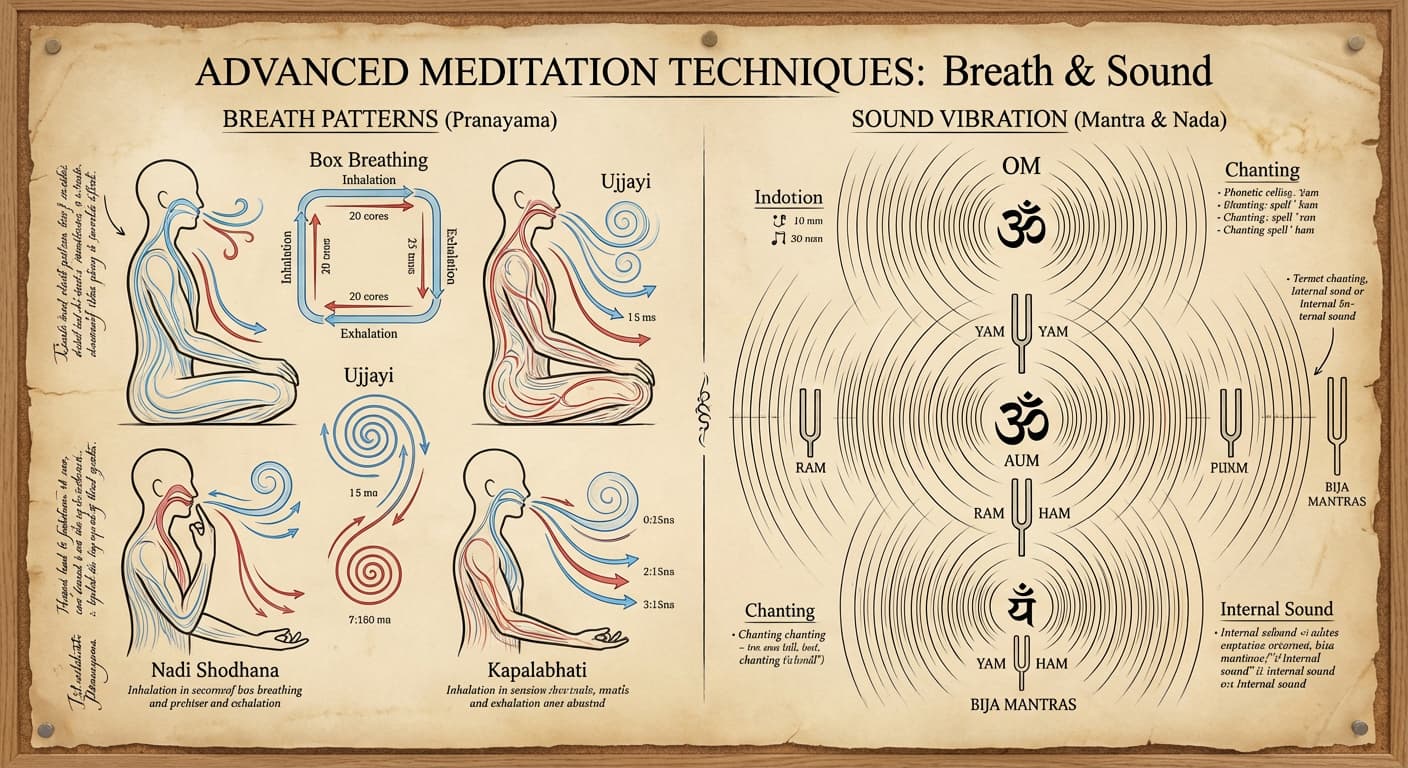
Integrate advanced breathing techniques with the visualization. Wim Hof method breathing before meditation can intensify the experience. Alternate nostril breathing (nadi shodhana) during meditation balances hemispheres while focusing on the third eye. Breath retention at the peak of inhalation while visualizing the glowing pineal gland can enhance activation, though start conservatively with 5-10 seconds if you try this technique.
Sound and Vibration
Add chanting or toning to your practice. The sound “OM” vibrates at approximately 136.1 Hz and may resonate with pineal tissue. Chant during the visualization phase, directing the vibration toward the center of your brain. Some practitioners use tuning forks tuned to 936 Hz (the “third eye frequency” according to some sound healing traditions), though scientific validation of specific frequencies is limited.
Darkness Meditation
Practice your pineal meditation in complete darkness or use an eye mask to eliminate all light. The pineal gland is extraordinarily light-sensitive, and complete darkness affects its function in unique ways. Some people report that darkness meditation produces particularly powerful activation experiences and enhanced visualization of inner light.
Common Challenges and Solutions
Most practitioners encounter obstacles. Understanding common challenges and their solutions helps you persist through difficulties.
Challenge: Difficulty Maintaining Focus
If your attention constantly wanders, start with shorter sessions—even 10 minutes—and gradually extend as concentration improves. Use the breath as an anchor—count each breath cycle to maintain focus. Accept that mind wandering is normal; the practice is noticing and returning attention, not achieving perfect stillness. Consider that severe pineal calcification may impair your ability to concentrate—addressing biological health through decalcification support can dramatically improve meditation capacity.
Challenge: No Sensations or Experiences
Lack of dramatic sensations doesn’t mean lack of effect. Subtle changes in sleep, stress, and cognition may be occurring without obvious perceptual signs. Severely calcified pineal glands respond slowly initially. Consider comprehensive biological support to enhance your gland’s responsiveness. Focus on consistency over immediate experiences—benefits accumulate gradually. Try different visualization colors or techniques to find what resonates with you.
Challenge: Physical Discomfort
Ensure proper posture with spine erect but not rigid. Use cushions, chairs, or back support as needed. Practice gentle stretching before meditation. If discomfort persists, address underlying issues through appropriate exercise or therapy. Remember that you can meditate in a chair—traditional cross-legged positions aren’t mandatory.
Challenge: Inconsistent Practice
Schedule meditation at the same time daily, treating it as non-negotiable. Start with a duration you can sustain rather than ambitious sessions you can’t maintain. Use meditation apps or journals for accountability. Join a group for social support. Remember that this is perhaps the most important practice for your cognitive health—prioritize accordingly.
Your Pineal Meditation Journey Begins Now
You now have everything needed for effective pineal gland guided meditation—a complete script, understanding of the science, preparation guidelines, realistic expectations, and knowledge of how biological support enhances results. The only remaining variable is your commitment to practice.
Pineal gland meditation offers profound benefits including enhanced cognitive function and memory, optimized neurochemical balance, deeper states of consciousness, reduced stress and improved emotional regulation, better sleep quality and circadian health, and protection against cognitive decline. These benefits accumulate progressively with consistent practice supported by biological optimization.
Start your practice today. Don’t wait for the “perfect” time or until you’ve read more or thought about it longer. Begin with one 20-minute session using the guided script provided. Notice what you experience. Commit to daily practice for at least one month before evaluating results. Consider whether comprehensive biological support through decalcification and pineal optimization would enhance your practice significantly.
Visit PureFocusLife.fun to explore how Pineal Guardian supports meditation practice through decalcification, detoxification, and comprehensive pineal optimization. Understand why practitioners consistently report that biological support dramatically deepens their meditation experiences and accelerates results.
When you’re ready to combine meditation practice with comprehensive biological optimization, order Pineal Guardian from the official source and experience how supporting your pineal gland’s health transforms both your meditation depth and your daily cognitive function.
Your pineal gland—the master regulator of consciousness, memory, and neurochemistry—is waiting to be activated. Give it the focused attention through meditation and the biological support through decalcification. Experience the enhanced cognition, expanded awareness, and optimal brain function that proper pineal activation makes possible.
Begin your guided meditation practice today. Support it with biological optimization. Trust the process, maintain consistency, and observe how both your meditation and your daily consciousness evolve over weeks and months of dedicated practice.
The ancient wisdom of third eye meditation combined with modern neuroscience and biological support creates a powerful path to cognitive optimization and expanded awareness. Walk that path starting now. Your brain, your consciousness, and your future self will thank you.
Get Your FREE Brain Health Guide
Download "7 Secrets to Brain Health" before you buy • Learn the science-backed strategies • No credit card required
Ready to Restore Your Memory?
Join thousands of people over 50 who have transformed their cognitive health with Pineal Guardian. Experience the mental clarity you deserve.
Share this article: